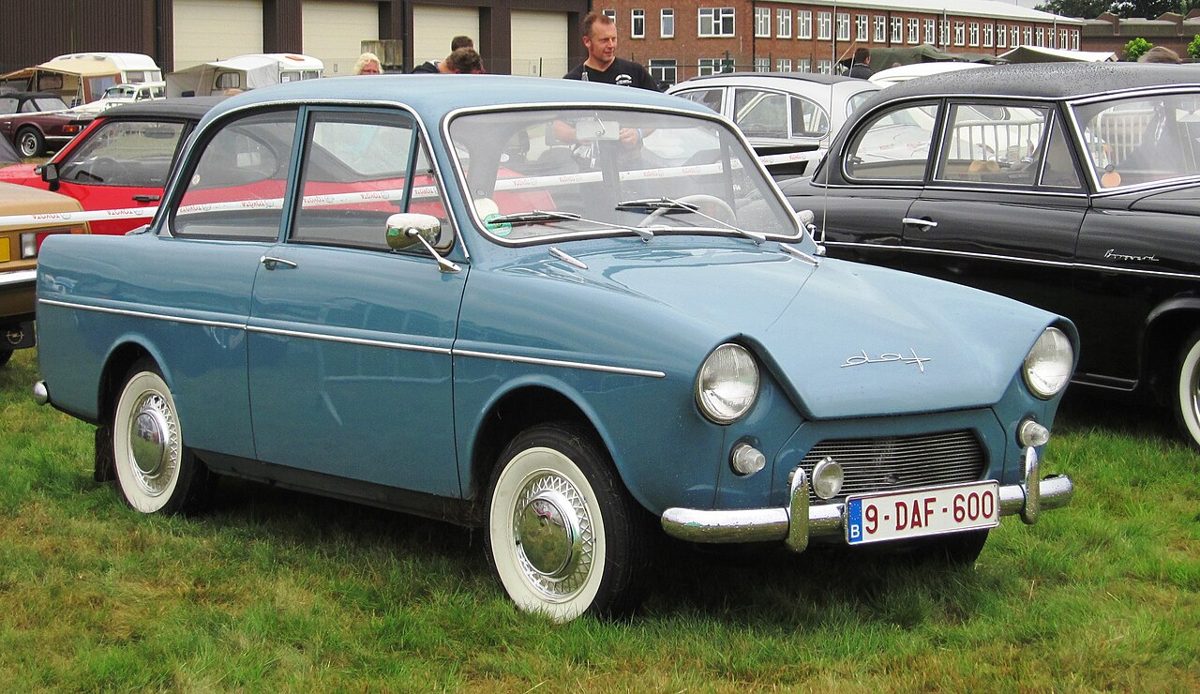
The Eindhoven Miracle: Hub van Doorne’s Vision for a Classless Car
In the grey, industrious landscape of post-war Europe, the automobile was a symbol of newfound freedom. However, for many, that freedom was tempered by the mechanical complexity of the machines themselves. In the Netherlands, brothers Hub and Wim van Doorne had already established a reputation for building tough, innovative trailers and trucks under the banner of Van Doorne’s Automobiel Fabriek—DAF. But Hub, a self-taught engineer with a penchant for simplification, harbored a dream of creating a "classless" car: a vehicle so simple to operate that it would open the world of motoring to everyone, regardless of their mechanical aptitude.
The culmination of this dream was unveiled at the 1958 Amsterdam Motor Show. The DAF 600 was not just another microcar; it was a fully realized, four-seater family sedan that dared to be different in two fundamental ways. First, it completely eliminated the traditional gearbox in favor of the Variomatic, a continuously variable transmission (CVT). Second, it utilized a front-mounted, air-cooled flat-twin engine that was as reliable as a Swiss watch and far easier to maintain. This combination of "Magic Belts" and a "Free-Breathing" boxer engine would become the hallmark of DAF for nearly twenty years.
To understand the DAF, one must understand Hub van Doorne’s philosophy. He didn't see the car as a status symbol or a plaything for the wealthy. He saw it as a tool for the common person. By choosing an air-cooled layout, he was making a statement about durability. In an era where radiators were prone to leaking, water pumps frequently failed, and anti-freeze was an expensive necessity, an air-cooled DAF was a car that simply worked, year-round, in the freezing Dutch winters and the humid summers of the Mediterranean.
The Heart of the Matter: Engineering the Air-Cooled Flat-Twin
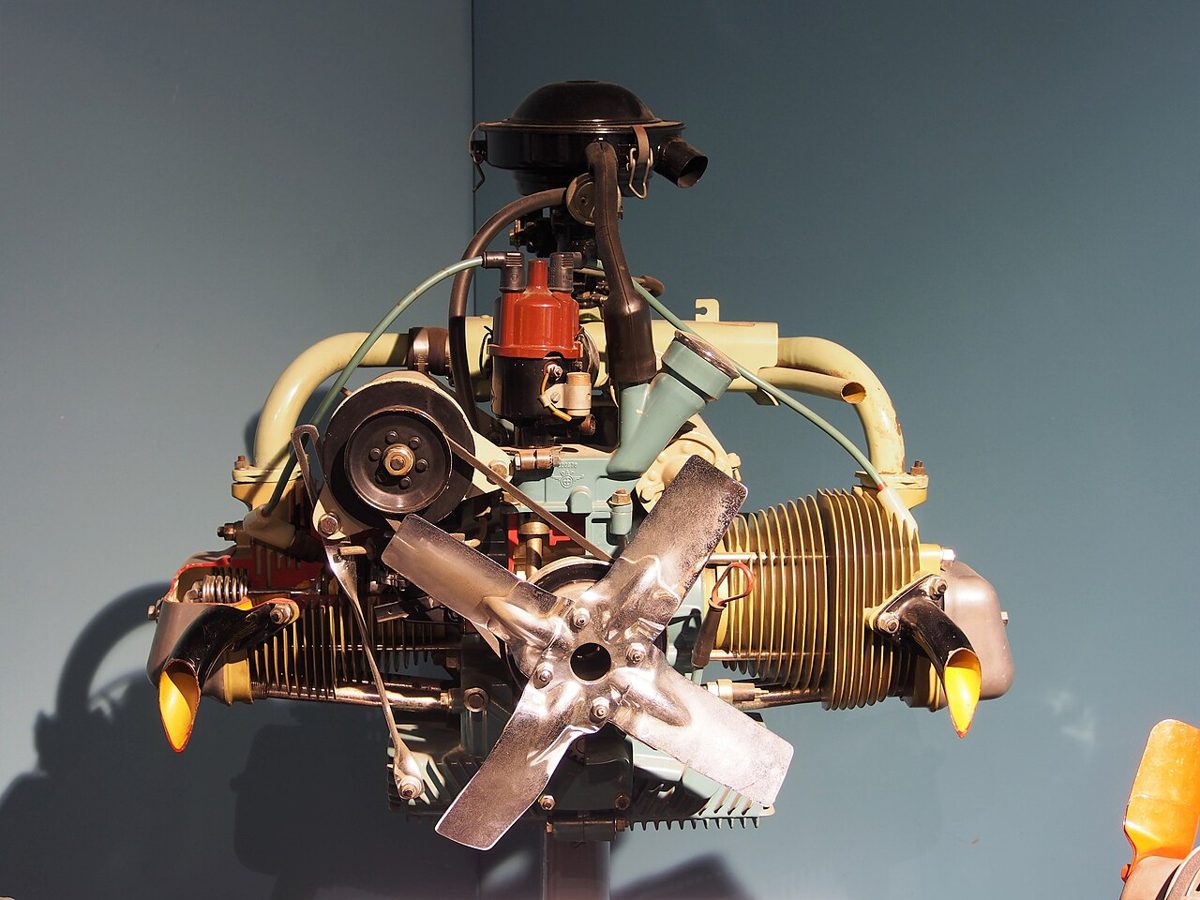
The engine that powered the first DAF 600 was a 590cc four-stroke unit that represented the pinnacle of simplicity. Hub van Doorne and his team chose the flat-twin (boxer) configuration for its inherent primary balance. Unlike an inline-two, where the pistons move together and create significant vibration, the boxer's opposing pistons cancel each other out, leading to a smoother, quieter idle. This was crucial for a car intended to feel refined and easy to drive.
The cooling system was a marvel of ducting. A large fan, mounted directly on the front of the crankshaft, drew air through a protective mesh and forced it through a series of aluminum shrouds. These shrouds were carefully designed to direct the air over the deep cooling fins of the cylinders and heads. This "forced air" cooling meant that the engine's temperature was tied directly to its RPM, ensuring that it stayed cool even when crawling through heavy city traffic—a common weakness for air-cooled cars of that era.
The materials used were also forward-thinking. The crankcase was cast from a high-grade aluminum alloy, keeping weight to a minimum, while the cylinders were made of durable cast iron. The overhead valve (OHV) setup was simple and robust, operated by a single camshaft located below the crankshaft. This layout kept the engine's profile low, allowing for a lower hood line and better forward visibility for the driver.
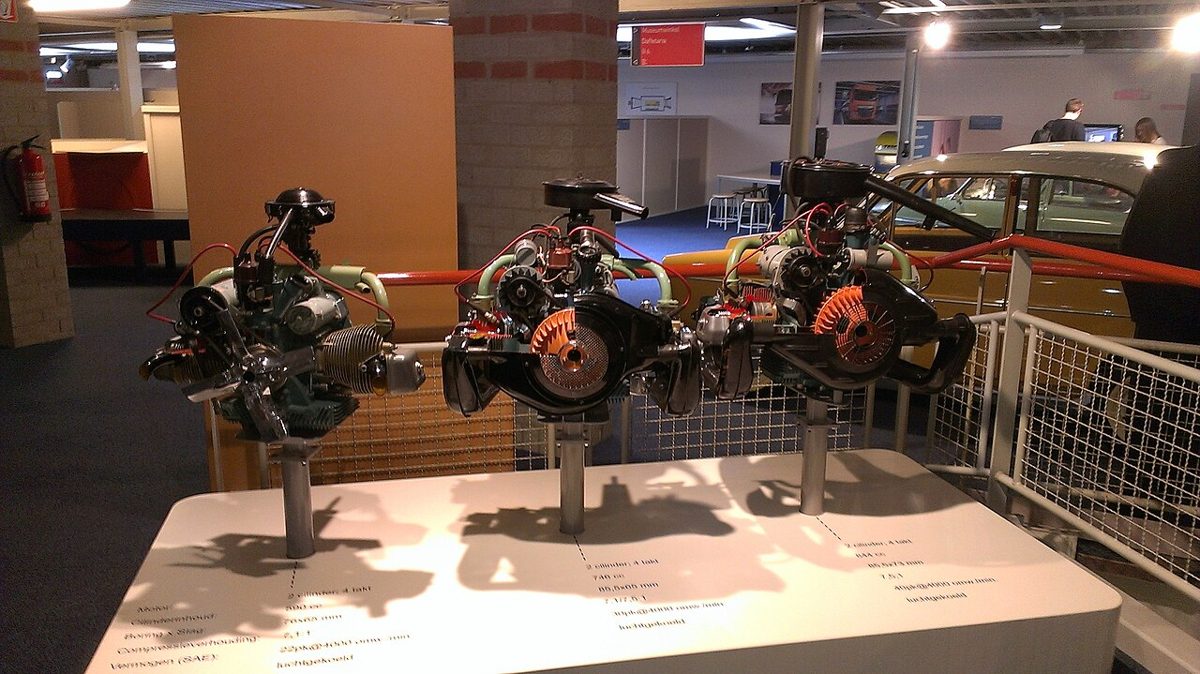
As the years progressed, DAF didn't just rest on their laurels. The engine grew with the needs of the consumer. In 1961, the displacement was increased to 746cc for the DAF 750 and the "Daffodil." This wasn't just a simple bore-out; the entire cooling system was revised to handle the increased heat, and the lubrication system was upgraded with a higher-capacity oil pump. By the time the final 844cc version arrived for the DAF 44, the engine was producing nearly 40 horsepower—a figure that allowed the lightweight car to cruise comfortably at 70 mph, a remarkable feat for a two-cylinder air-cooled unit.
The Variomatic Revolution: Understanding the "Magic Belts"
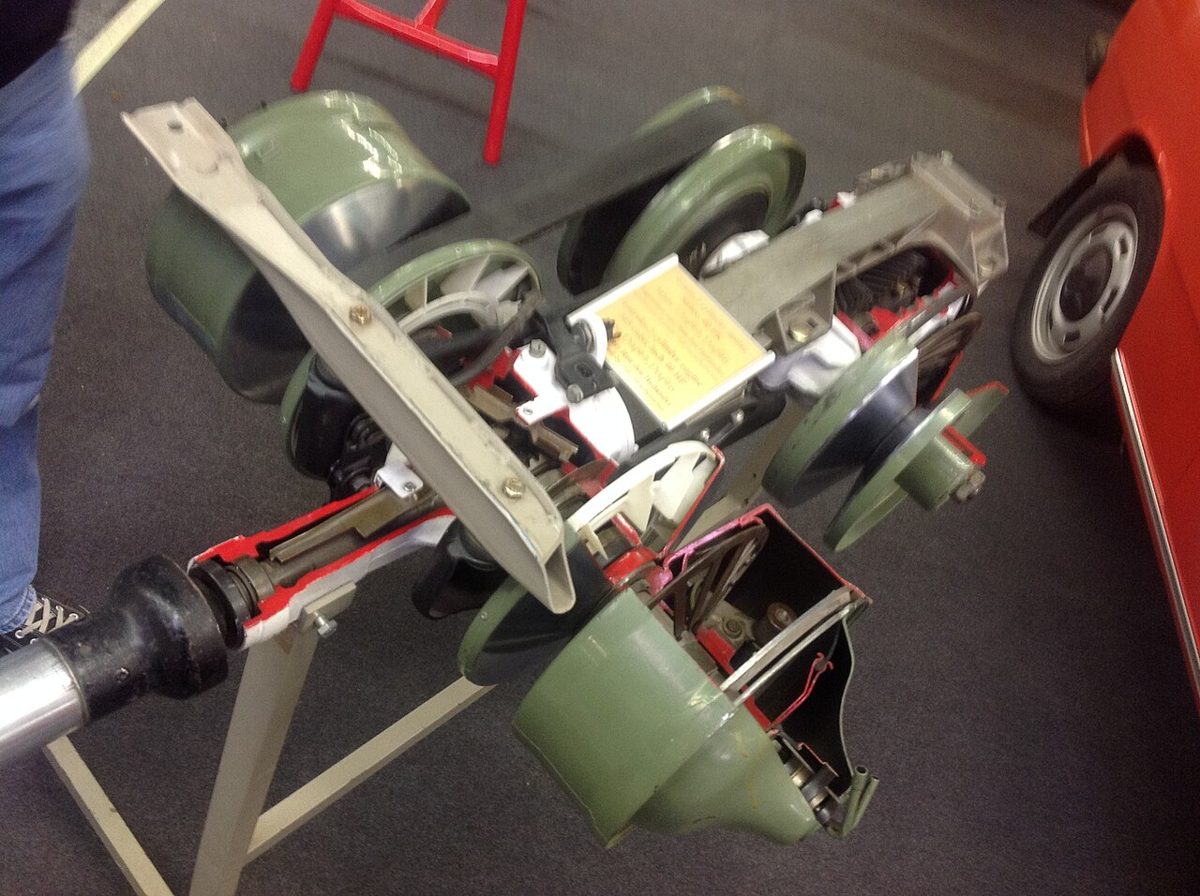
While the engine provided the power, the Variomatic transmission is what gave DAF its unique identity. Hub van Doorne’s invention was a mechanical computer of sorts. It consisted of two primary pulleys (connected to the engine) and two secondary pulleys (connected to the rear wheels), linked by heavy-duty, fabric-reinforced rubber V-belts.
The genius of the system lay in its control mechanism. Each primary pulley contained centrifugal weights that would push the pulley sheaves together as engine speed increased, forcing the belt to a larger diameter and increasing the gear ratio. Simultaneously, an engine manifold vacuum system acted on a large rubber diaphragm inside the pulley. When the driver floored the accelerator, the drop in vacuum would "kick down" the transmission to a lower ratio for better acceleration. Conversely, when cruising at a steady speed, the vacuum would help pull the pulleys into a "high" ratio for fuel economy.
This system effectively provided an infinite number of gear ratios between its lowest and highest settings. There were no jerks, no missed shifts, and no clutch pedal to master. It was the world's first truly successful CVT in a production automobile. For the driver, it meant that the engine was always working at its most efficient speed for the current road load. If you were climbing a steep hill, the Variomatic would seamlessly adjust to the perfect ratio to keep the flat-twin in its torque band without any intervention from the driver.
Another fascinating aspect of the Variomatic was its role as a differential. In the earlier DAF models (600 through the 55), each rear wheel had its own dedicated belt and pulley system. This meant that if one wheel lost traction on ice or mud, the other wheel would continue to receive power, effectively acting as a limited-slip differential. This made the DAF surprisingly capable in poor conditions, a trait that would later lead to its success in the world of rallying.
DAF 600: The Pioneer of Eindhoven
The DAF 600 was the car that started it all. Produced between 1959 and 1963, it was a compact, three-box sedan that featured a charmingly simple design. With its high roofline and large windows, it offered an airy, spacious interior that belied its small exterior dimensions. The 590cc engine produced about 22 horsepower at 4,000 RPM, which was enough to give the 600 a top speed of roughly 65 mph.
The 600 was marketed as "The car with the 100 gears," a slogan that highlighted the smooth driving experience. At the time, most small European cars had three-speed manual gearboxes that required a fair bit of skill to operate smoothly. The DAF, by contrast, was a "step-in and go" machine. You simply moved a small lever to "F," pressed the gas, and the car did the rest.
However, the 600 faced an uphill battle in the court of public opinion. Because it was so easy to drive, it quickly became associated with drivers who were seen as "unskilled"—particularly the elderly and women (in the chauvinistic parlance of the time). This "oma-auto" (grandma car) image would haunt DAF for years, despite the fact that the mechanicals under the skin were actually quite sophisticated. To counter this, DAF began to introduce "Luxe" versions with better trim and more features, trying to position the car as a premium small vehicle rather than just a budget commuter.
Blooming Bright: The Daffodil and DAF 33
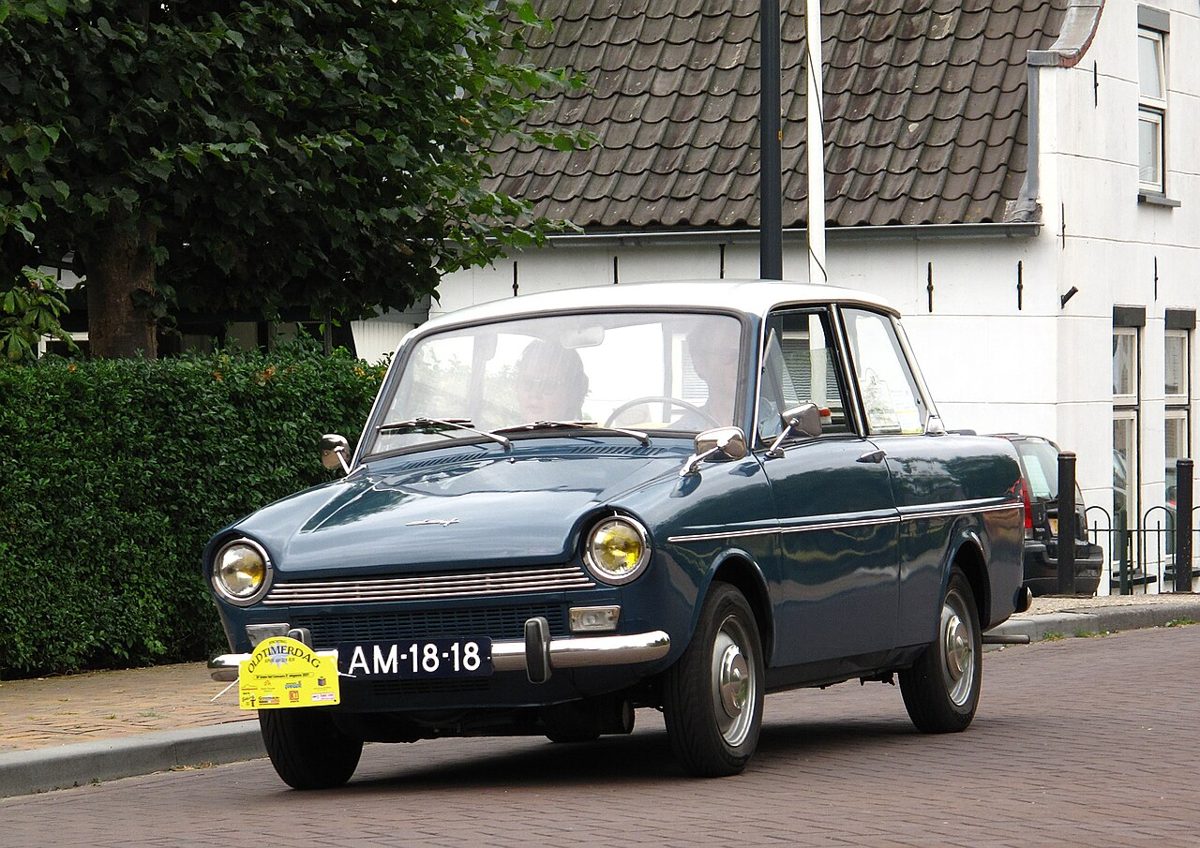
In 1961, DAF launched the Daffodil, a name that signified a new, more colorful era for the brand. The Daffodil was essentially a more luxurious version of the 750 (the 600’s successor), and it introduced several design refinements that would carry the brand through the mid-60s. The front grille was widened, and the interior received a more modern dashboard with integrated controls.
Internally, DAF updated the Daffodil through three distinct generations, known to enthusiasts as the 30, 31, and 32. The 30 was the original, while the 31 (introduced in 1963) featured a revised roofline and a cleaner rear end. The 32 (1965) brought further styling tweaks and improved the reliability of the Variomatic's vacuum system. These cars were powered by the 746cc version of the air-cooled twin, which provided a much-needed boost in performance for highway driving.
In 1967, DAF simplified their naming structure, and the Daffodil 32 became the DAF 33. The 33 would remain in production until 1974, becoming the most iconic of the "small" DAFs. It was a rugged, dependable little car that became a staple of Dutch life. Even today, the "puf-puf" sound of a DAF 33 engine is instantly recognizable to anyone who grew up in the Netherlands during that era. For the air-cooled enthusiast, the 33 represents the pure essence of DAF: a simple, honest machine that used innovative technology to solve a universal problem.
Michelotti’s Masterpiece: The DAF 44 and 46
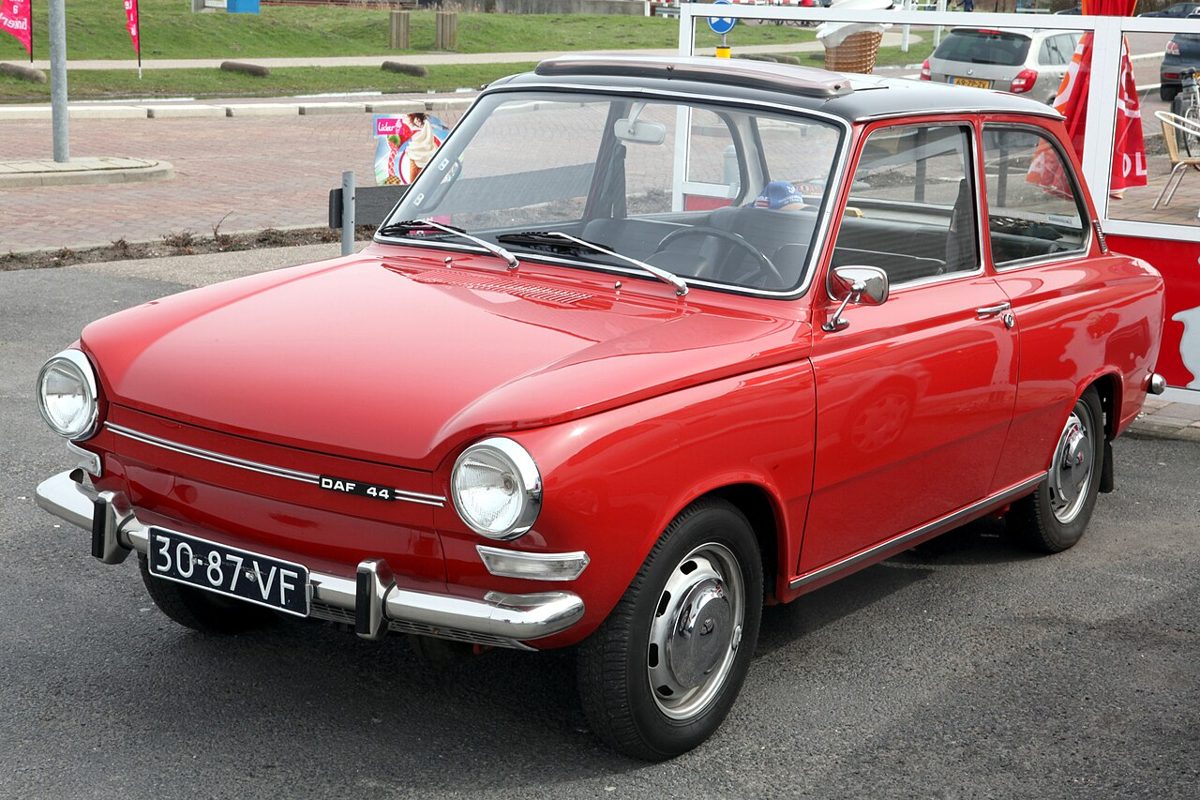
As the 1960s reached their peak, DAF knew they needed to expand their lineup to include a larger car that could compete with the likes of the Volkswagen Beetle and the newly emerging Japanese imports. They turned to the legendary Italian designer Giovanni Michelotti to pen a new body. The result was the DAF 44, launched in 1966.
The 44 was a revelation. It was a handsome, sharp-edged sedan that looked much more modern than its predecessors. Michelotti’s "B-body" design featured a wide, low stance and a distinctive "folded paper" look that was very much in vogue at the time. Inside, the 44 felt like a much larger car, with comfortable seats and a level of fit and finish that rivaled many more expensive competitors.
Under the hood sat the 844cc version of the air-cooled boxer twin. Producing 40 horsepower, this engine was the most powerful air-cooled unit DAF ever produced. It featured a larger carburetor and a more efficient exhaust system, allowing the 44 to reach speeds of nearly 80 mph. The 44 also introduced a more refined version of the Variomatic, which was better balanced to reduce vibration at high speeds.
The final evolution of the air-cooled DAF was the 46, introduced in 1974. On the outside, it looked almost identical to the 44, but under the skin, it was a different animal. It utilized the rear suspension from the water-cooled DAF 66, which featured a de Dion axle and a single-belt version of the Variomatic. This setup provided significantly better handling and a smoother ride, but it also marked the beginning of the end. By the mid-70s, the automotive world was moving toward larger, water-cooled four-cylinder engines, and the days of the air-cooled twin were numbered.
Rallying the Belts: Proving the Toughness of the CVT
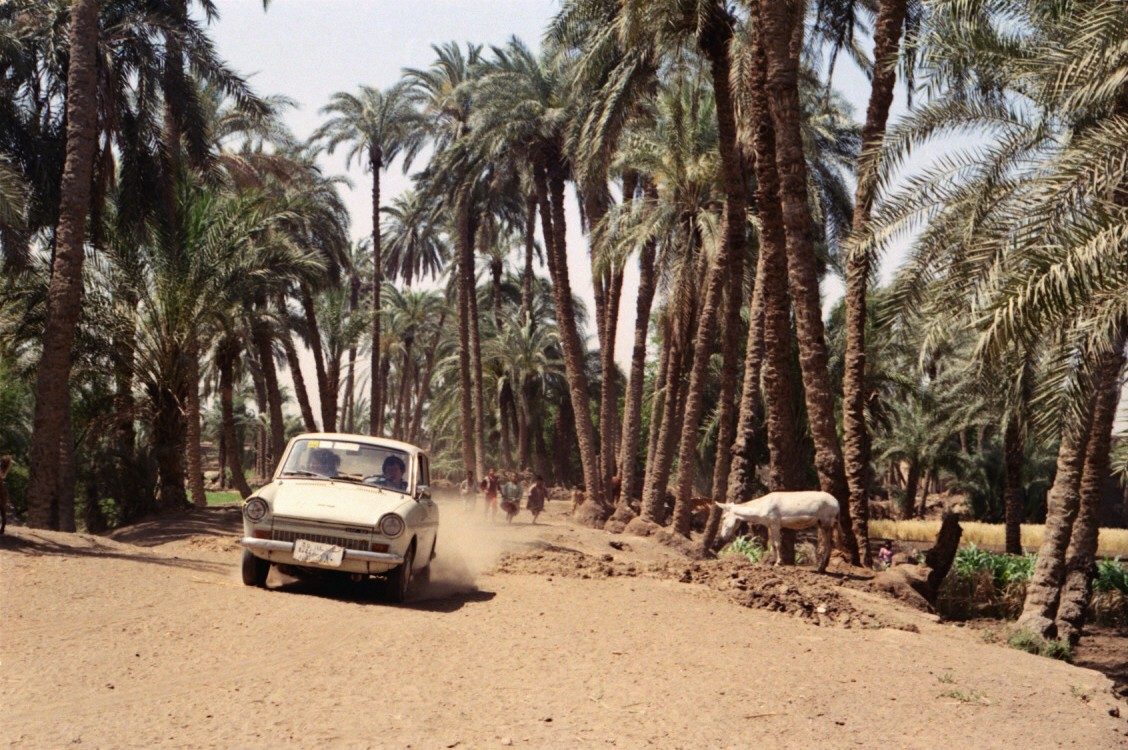
One of the most effective ways DAF fought back against its "slow car" image was through international rallying. To the surprise of many, the little belt-driven cars from Eindhoven proved to be incredibly formidable in the dirt. The Variomatic's ability to act as a limited-slip differential gave the DAFs a massive advantage in slippery conditions like mud, snow, and loose gravel.
In the 1960s, DAFs became a common sight on the European rally circuit. They consistently won their classes in the Monte Carlo Rally, the Tulip Rally, and the Alpine Rally. The cars were often modified with heavy-duty skid plates, stiffened suspensions, and high-performance carburetors, but the core engine and transmission remained remarkably close to the production versions.
The most famous of DAF's rally exploits was the 1968 London-Sydney Marathon. This 10,000-mile odyssey across Europe, Asia, and Australia was the ultimate test of endurance. Two DAF 55s (the water-cooled successor to the 44, but still using the Variomatic) were entered, and both finished the grueling race, placing 17th and 56th overall out of nearly 100 starters. This performance silenced the critics who claimed that rubber belts could never survive the rigors of serious driving. For the air-cooled enthusiast, these rally successes are a point of pride, proving that the DAF was a tough, capable machine that punched far above its weight class.
The Volvo Transition and the DAF Legacy
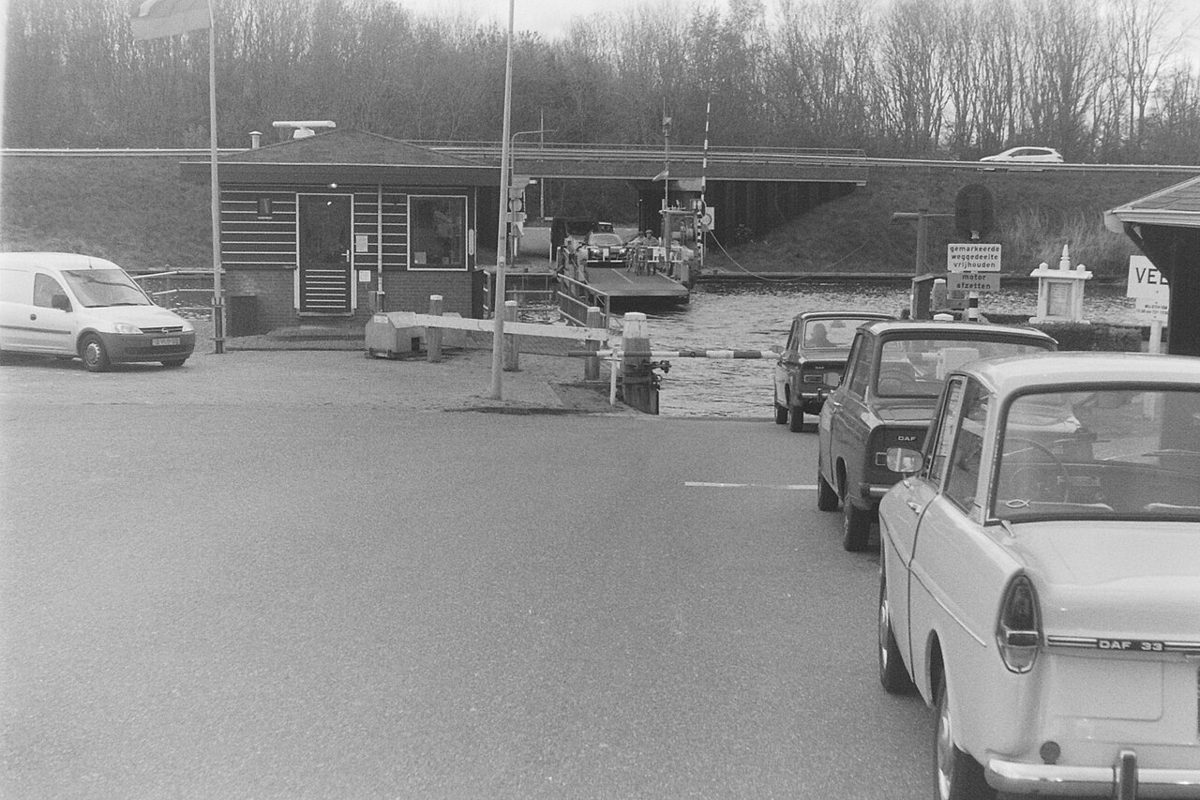
By the early 1970s, the financial strain of developing new models proved too much for the relatively small DAF company. In 1975, the passenger car division was sold to Volvo. The DAF 66 was rebranded as the Volvo 66, and the upcoming DAF 77 project was completed by Volvo and launched as the Volvo 340 series. While Volvo kept the Variomatic technology alive for many more years, they quickly phased out the air-cooled flat-twin engine in favor of water-cooled units from Renault and their own in-house designs.
However, the legacy of the air-cooled DAF lives on. Today, these cars are highly prized by collectors and air-cooled enthusiasts. They are celebrated for their unique engineering, their charming "puf-puf" engine note, and their role as pioneers of the modern CVT. The DAF Club Nederland is one of the most active car clubs in Europe, ensuring that parts and expertise remain available for those who want to keep these Dutch delights on the road.
Why does the DAF matter to the air-cooled community? Because it represents a different path. While Volkswagen was perfecting the rear-engine layout and Citroën was mastering front-wheel drive, DAF was exploring the possibilities of automation and simplicity through the front-engine, belt-driven boxer. It is a car that reminds us that there is more than one way to build a great automobile. It is a testament to the vision of Hub van Doorne: a man who believed that driving should be for everyone, and that a small, air-cooled engine was all you needed to see the world.
Image credits
- COVER: DAF 600 Luxe 1961 by Charles01, CC BY-SA 3.0. Subject: A pristine 1961 DAF 600, showing the original design that launched the brand's passenger car era.
- IMG1: 1959 DAF 600 2-cylinder Boxer engine by Alf van Beem, Public Domain. Subject: The 590cc air-cooled flat-twin power unit in all its simplistic glory.
- IMG2: DAF 44 Variomatic belt-drive transmission by Andrew Bone, CC BY 2.0. Subject: A close-up of the "Magic Belts" and pulleys that provided infinite gear ratios.
- IMG3: DAF 2-cylinder engine family by Roepers, CC BY 3.0. Subject: A museum display comparing the 590cc, 746cc, and 844cc variants of the air-cooled boxer.
- IMG4: 1966 DAF Daffodil 32 by Rutger van der Maar, CC BY 2.0. Subject: The stylish 1966 Daffodil, showing the Michelotti-influenced design refinements.
- IMG5: DAF 44 by Joost J. Bakker, CC BY 2.0. Subject: A well-preserved DAF 44, the larger "B-body" sedan that brought DAF into the modern era.
- IMG6: DAF 33 in rally trim by Joost J. Bakker, CC BY 2.0. Subject: A DAF 33 prepared for rally use, illustrating the brand's rugged competition heritage.
- IMG7: DAF 33, 46, and 44 models by Roepers, CC BY-SA 4.0. Subject: A trio of DAFs (33, 46, and 44) waiting together, representing the full evolution of the air-cooled line.